1. Can you legally get married in Israel?
This is the first question almost every couple planning a destination wedding in Israel asks us, so let's start with it. Israel has no civil marriage. A Jewish couple can be legally married here only through the Chief Rabbinate, which is Orthodox. That works well for some couples and not at all for others, so here are the three routes we see most often:
- An Orthodox Jewish wedding registered with the Rabbinate. Both partners must be Jewish according to Orthodox law. Couples from abroad bring a letter from their rabbi confirming that they are Jewish and single, plus passports and their parents' ketubah. The Rabbinate accepts letters only from rabbis it recognises, so check this with your rabbi early, and plan to open the file with the Rabbinate roughly one to three months before the date.
- Legal marriage at home, wedding celebration in Israel. The most common route for our couples from the US, the UK and South Africa: you sign the papers at the city hall at home, and the chuppah, the family and the party happen here. The ceremony can be Orthodox, Conservative, Reform or secular — it simply isn't the legal step.
- Non-Orthodox ceremony only. Reform, Conservative (Masorti) and secular rabbis and celebrants do beautiful ceremonies in Israel. They are not legally registered here, so combine them with the legal step at home.
We are wedding photographers, not lawyers: rules change, so please confirm the legal side with your rabbi, the Rabbinate or a lawyer before you book flights.
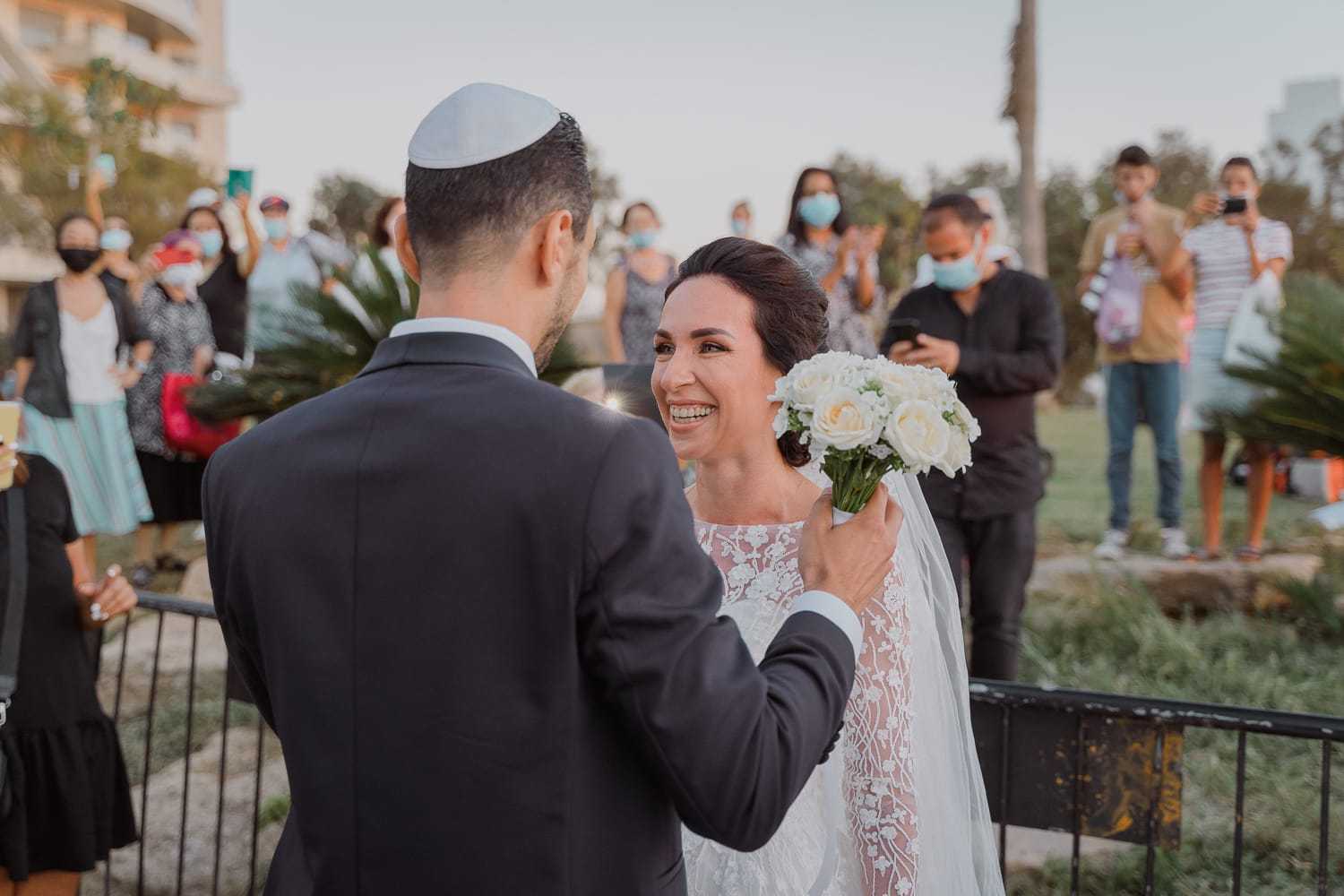
2. Best time for a wedding in Israel: season, sunset and dates
Season. Israeli wedding season traditionally starts in April–May, after Lag BaOmer, and runs through the warm months. Summer evenings are hot but dry and rain-free, which is why outdoor wedding venues by the sea and in the hills are so popular. Spring and autumn are softer and very pleasant.
Winter has the best weather. It sounds unexpected, but winter (roughly November–March) often gives the most beautiful light and comfortable temperatures of the year. There is a chance of rain, so for an outdoor venue keep an indoor plan B — but the mild, clear days in between are hard to beat.
Sunset. Most chuppahs here happen around sunset, and the light makes a huge difference to the photos. In Jerusalem and Tel Aviv the sun sets at about 7:45 pm in June–July and about 4:40 pm in December. We plan the whole timeline around this.
The most popular day is Thursday. Thursday evenings are the classic Israeli wedding night, so the best venues, photographers and videographers for Thursdays are booked first. If you have a Thursday in mind, book earlier rather than later.
Dates to avoid. Jewish weddings are not held on Shabbat and holidays, and most couples avoid the Omer period between Pesach and Shavuot (Lag BaOmer is the popular exception) and the Three Weeks in summer. Your rabbi will tell you which dates work for your family's custom.
3. Wedding venues in Israel by region
Israel is small, but every region feels different. Here is how we describe them to couples, with real weddings we photographed there:
Jerusalem and the Judean Hills
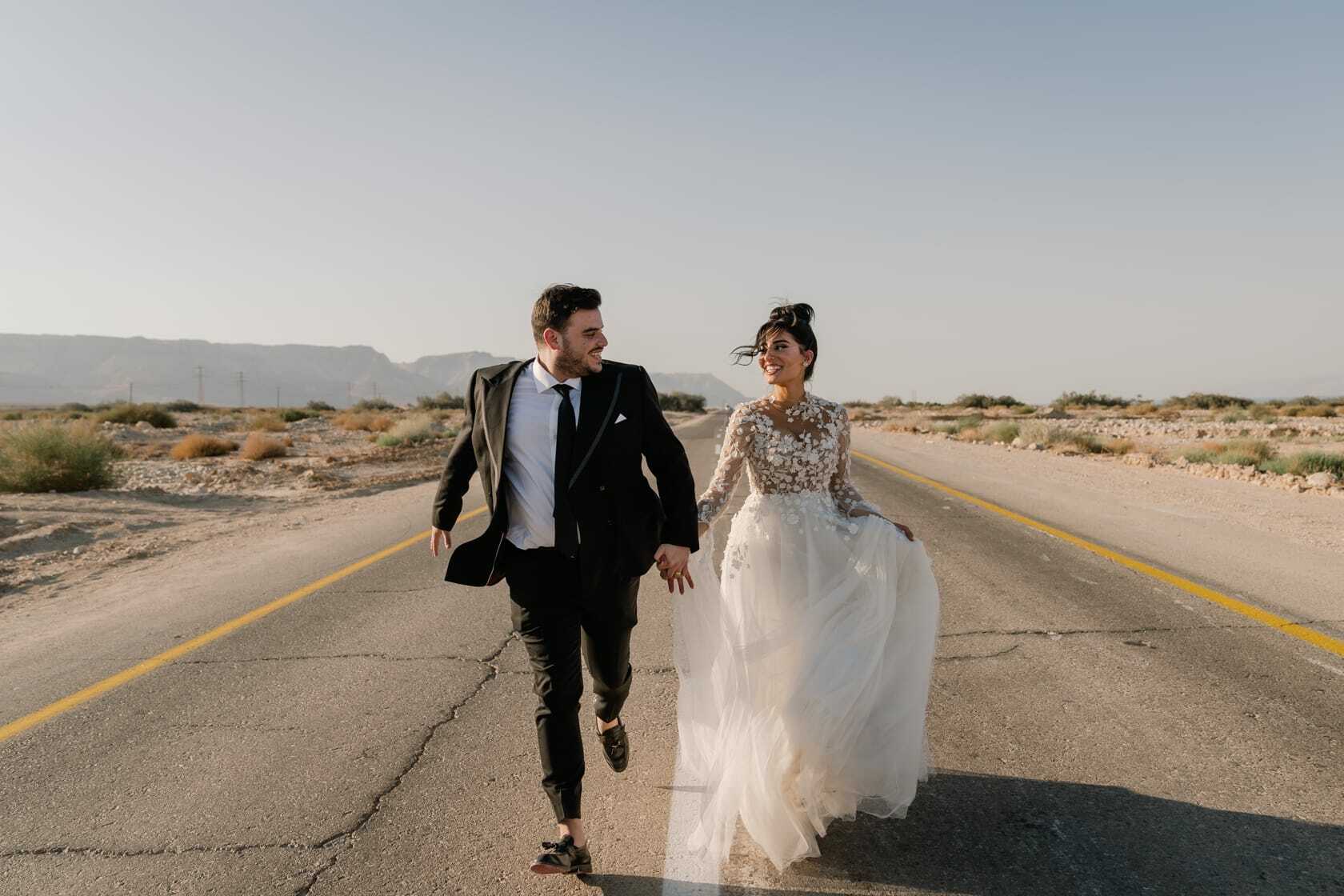
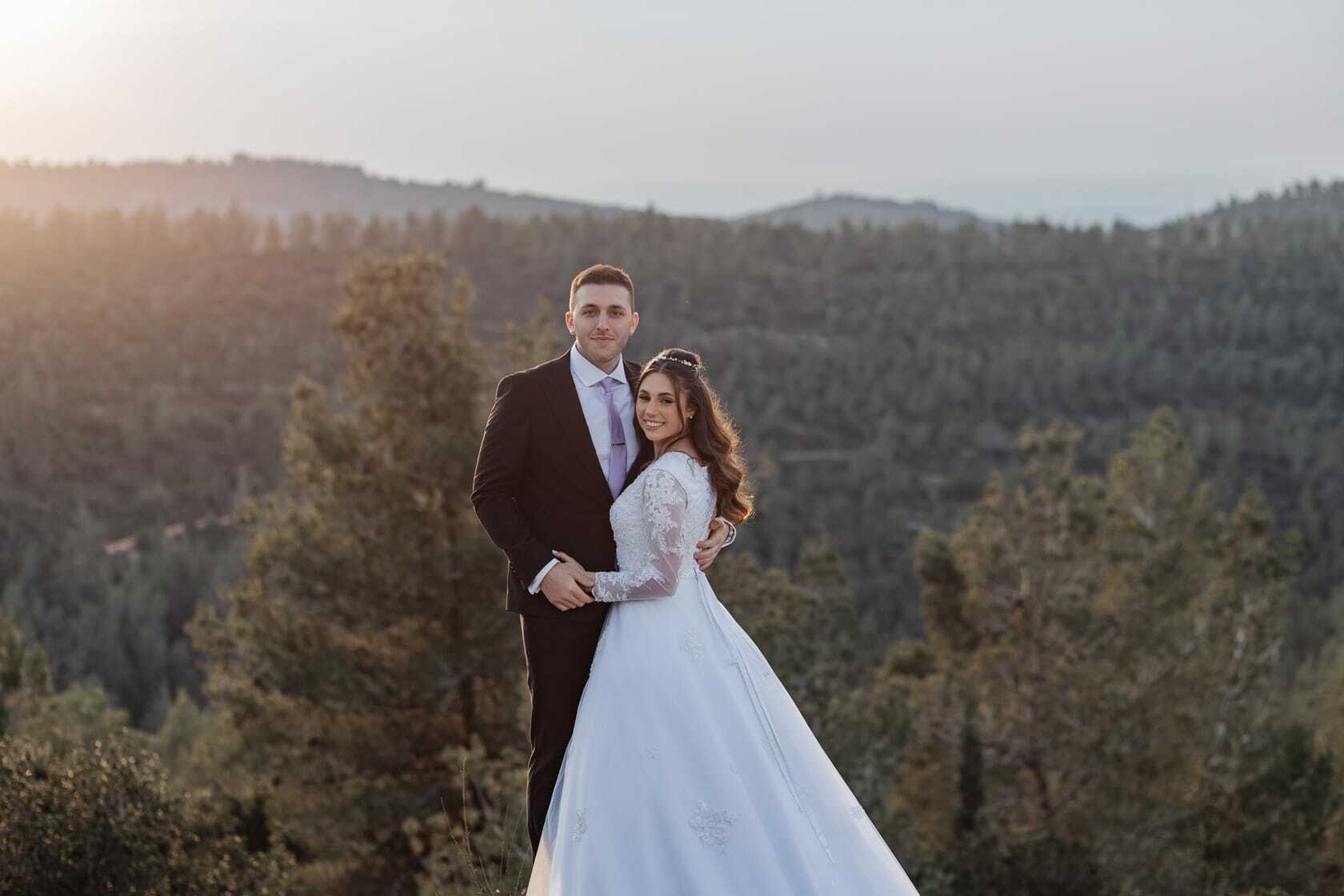
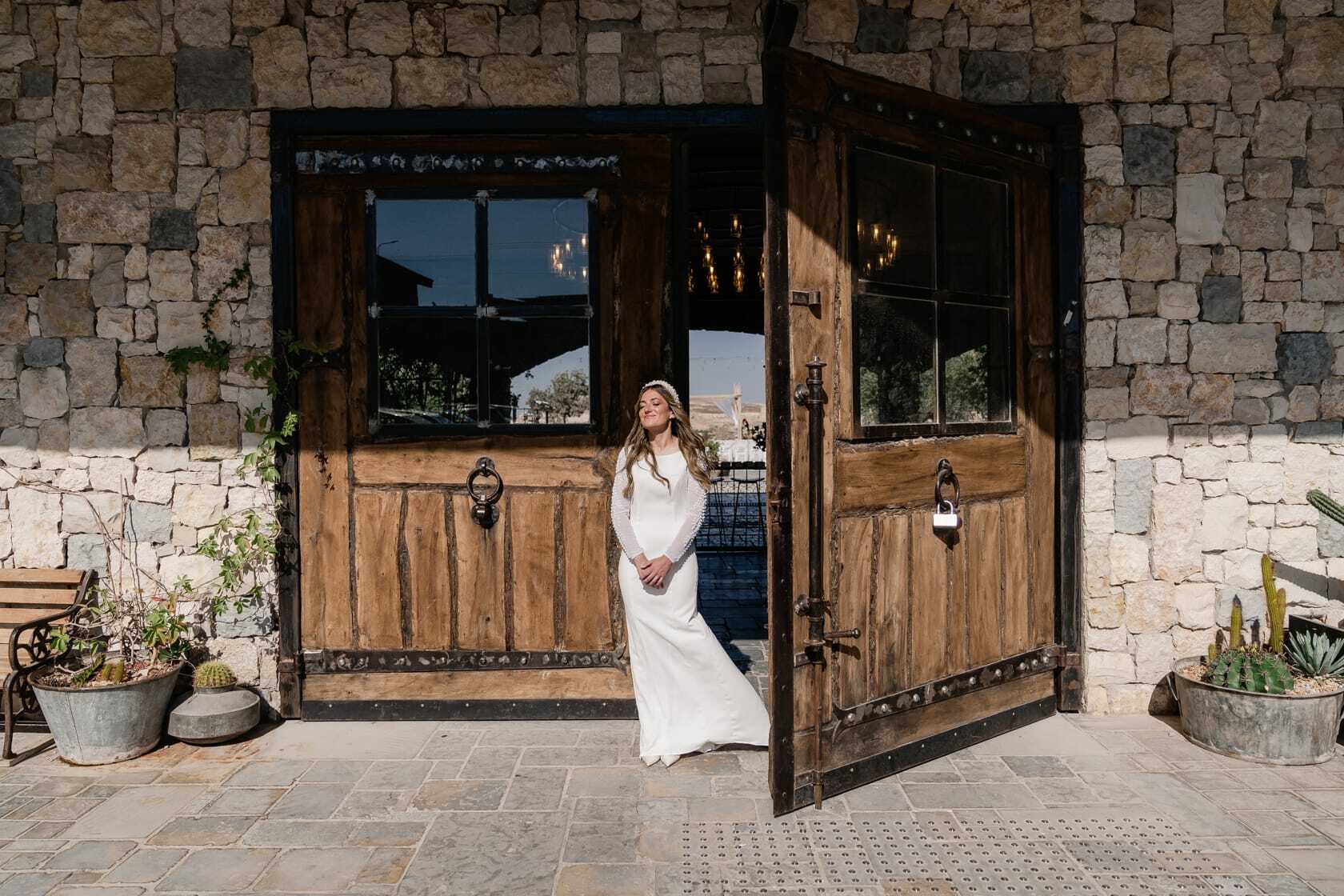
Stone, history and hills at golden hour — the classic choice for a Jewish wedding in Israel. Rachel & Aryeh married at Olmaya in Jerusalem and spent a second day with us in the desert near the Dead Sea. Kedma in Neve Ilan, just outside the city, hosted a beautiful Orthodox wedding, and Psagot Winery looks like Tuscany, with views over the hills. More: Ben & Shiri's wedding in Jerusalem, Dina & Elisha's Orthodox wedding.
Caesarea and the coast
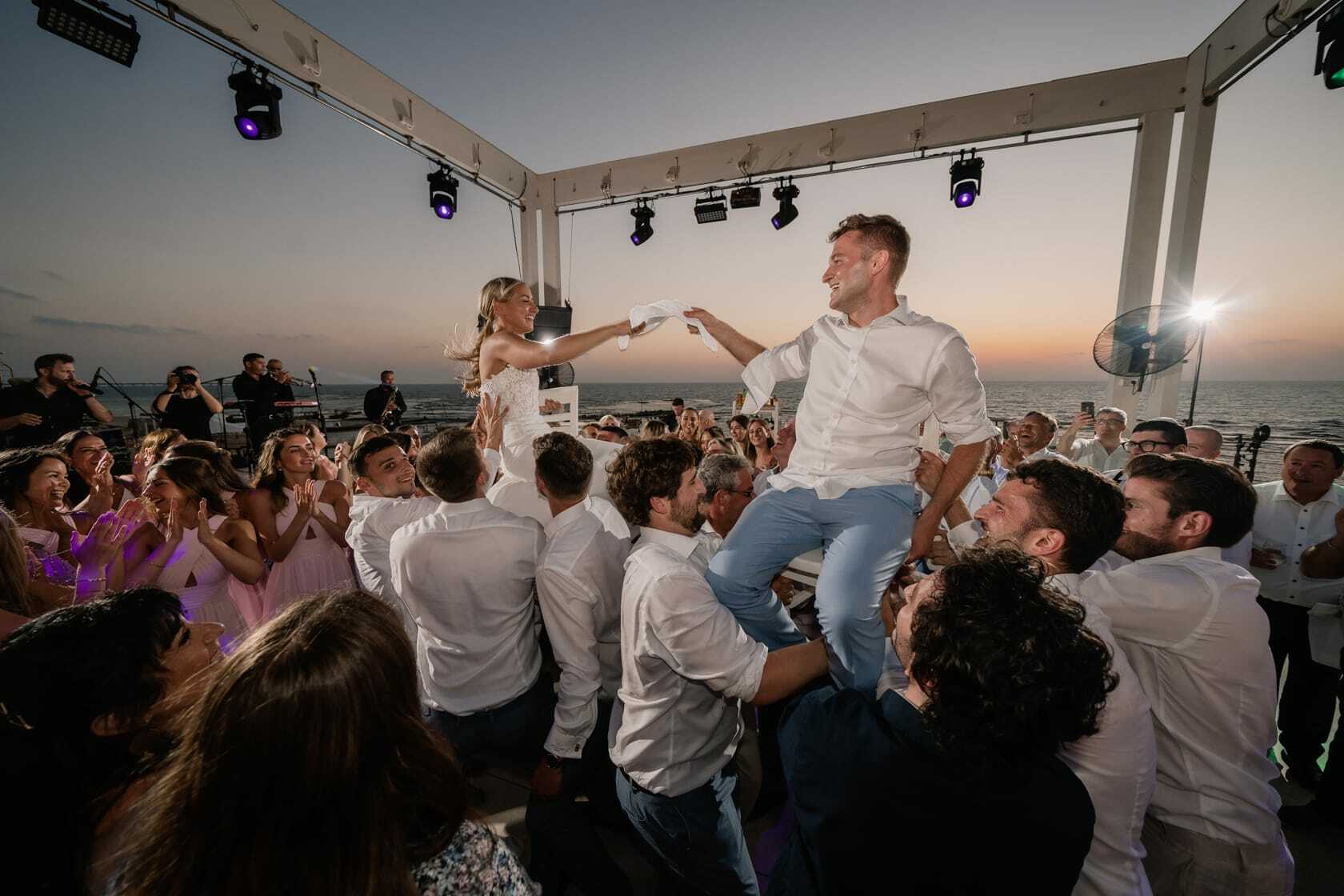
A chuppah on the beach with the sun going down into the Mediterranean. Liz & Omri married at Caesar Yam right on the sand, and Al-HaYam in Caesarea is made for sunset ceremonies. Further south, Makom Bayam in Ashkelon hosted a South African couple with guests flying in from around the world.
Tel Aviv
The easiest choice for guests flying in: one city, hotels, beaches and nightlife. See a Jewish wedding in Tel Aviv.
Haifa and the north
Green hills, the Carmel and the sea, a little cooler in summer. We work in Haifa and all over the north — see photographer in Haifa.
Desert and the Dead Sea
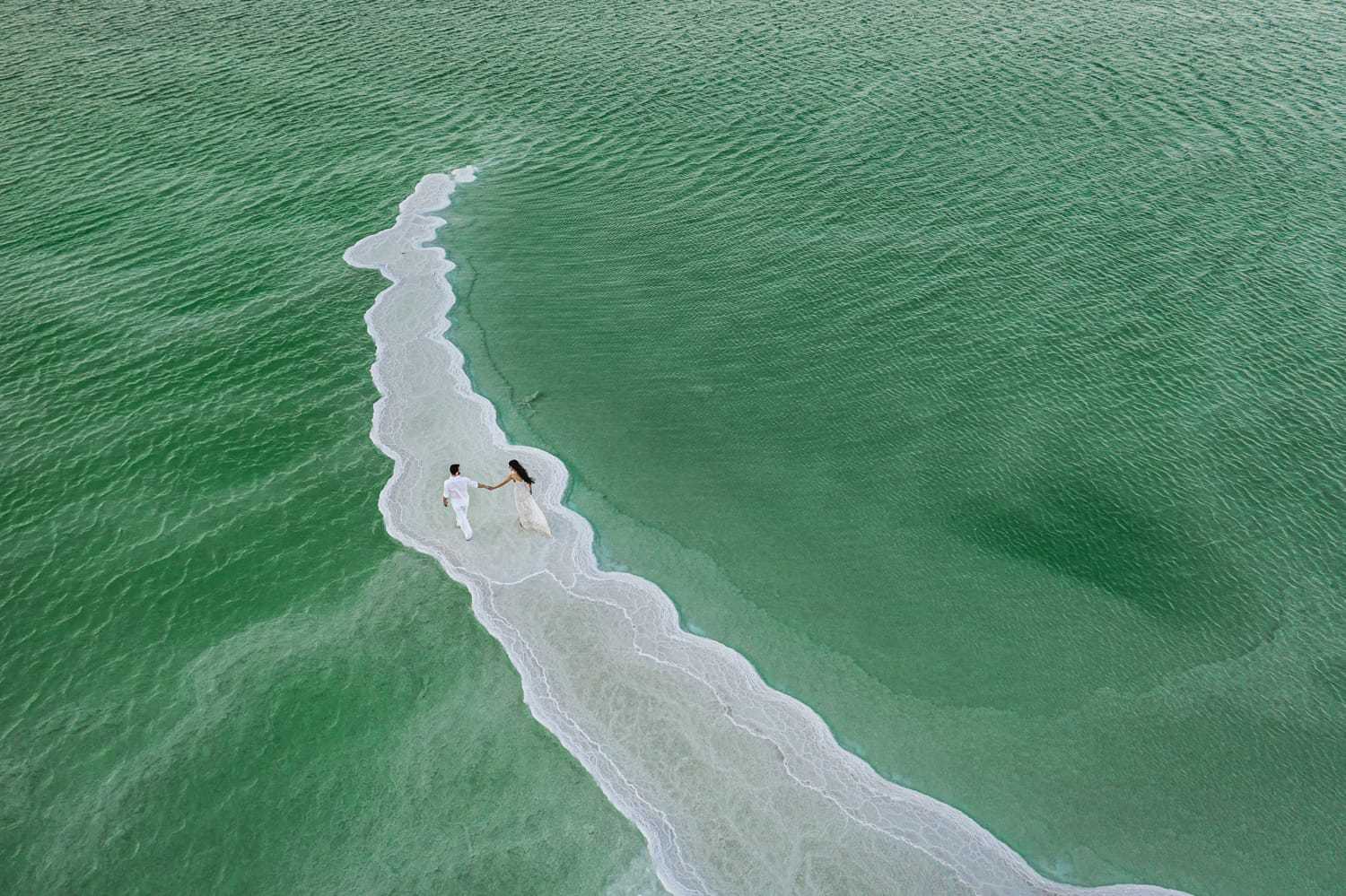
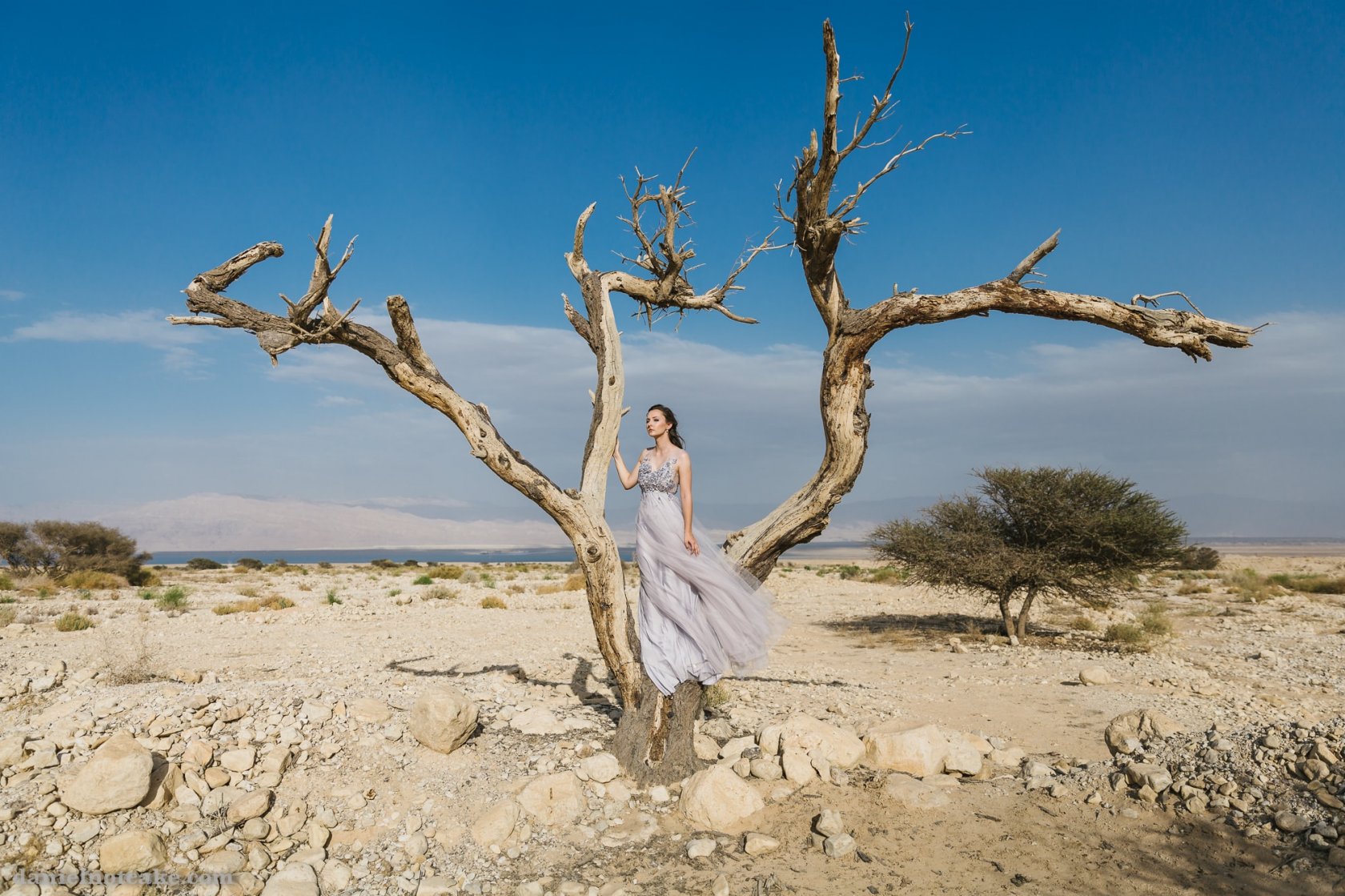
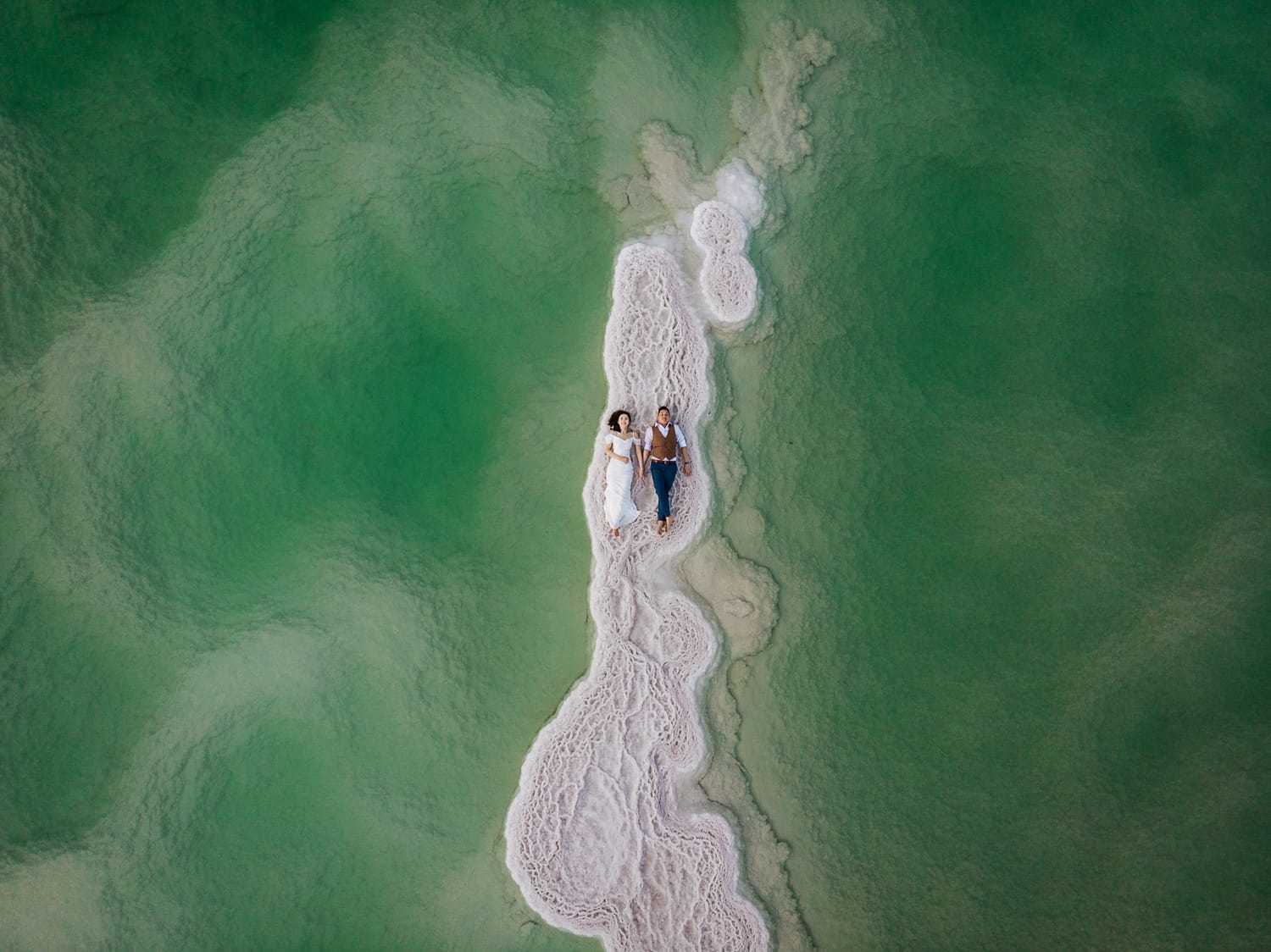
For small weddings, elopements and the day-after shoot: huge spaces and light you won't find anywhere else. See our desert and Dead Sea wedding and an elopement in Jerusalem and the Dead Sea.
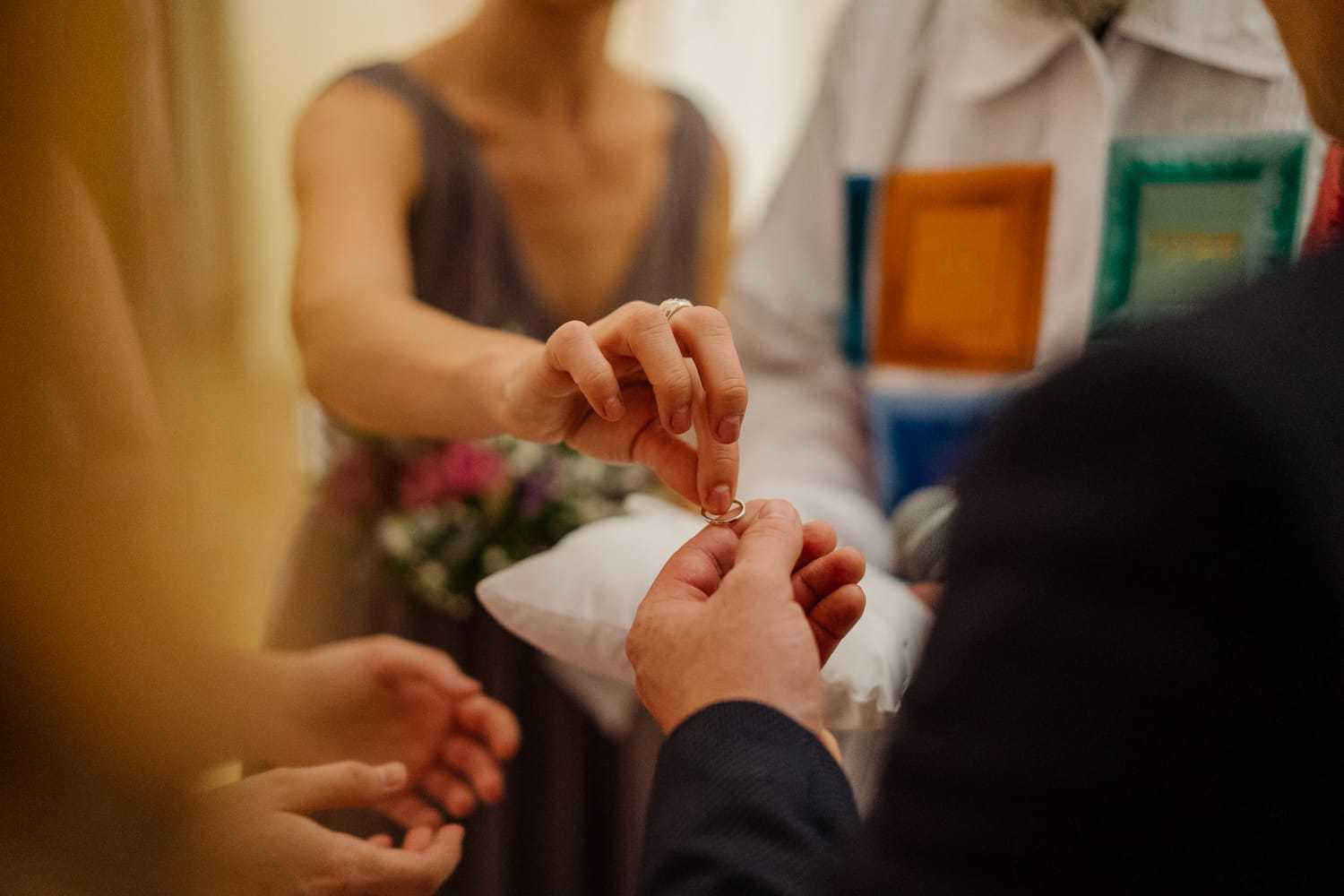
4. A Jewish wedding day in Israel: typical timeline
If you have only been to weddings in the US or the UK, a few things here will surprise you. A typical evening:
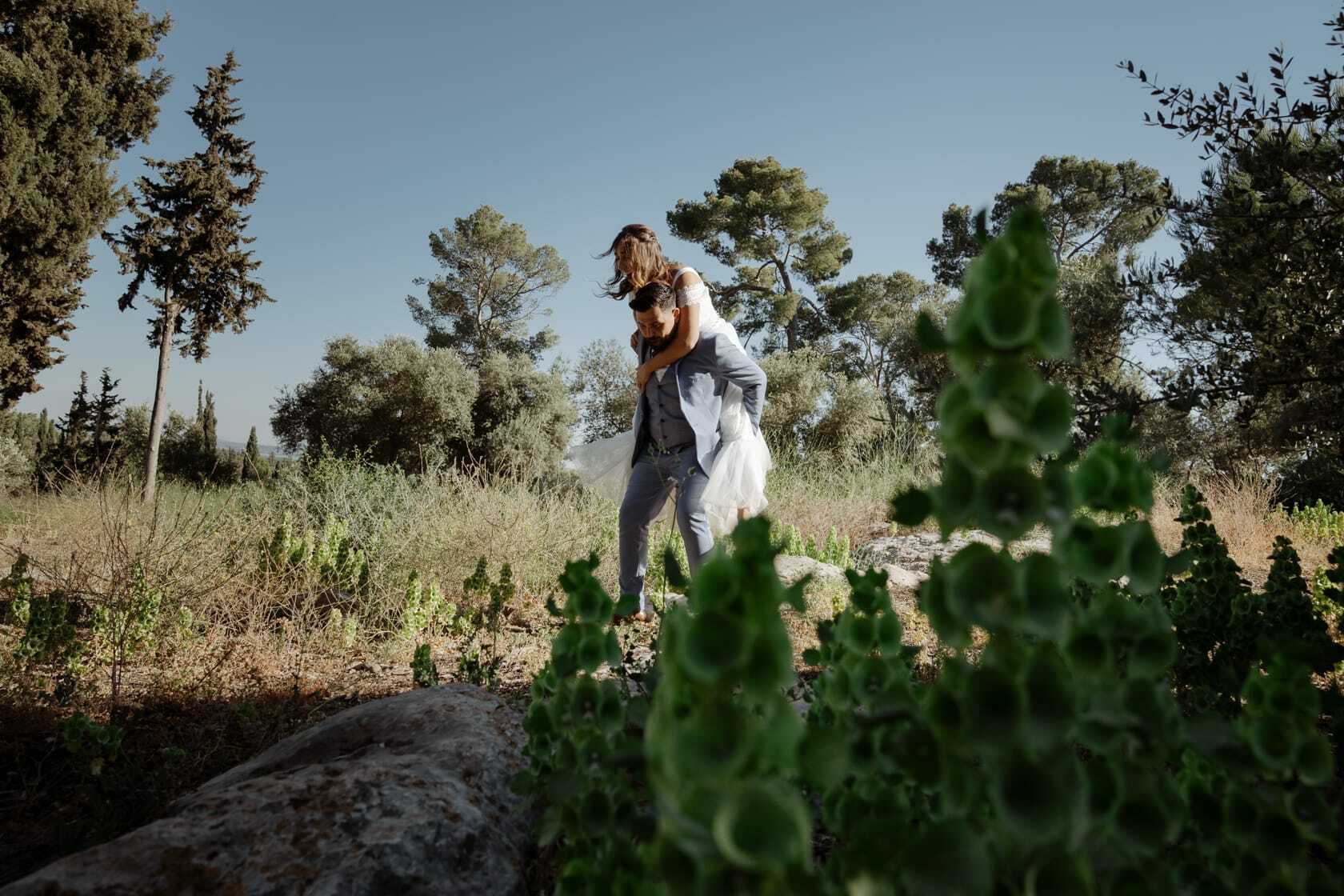
- Afternoon — couple portraits. Many couples do a first look and portraits before the guests arrive, while the light is still soft. It is the calmest hour of the day, and it is where the photos you will frame come from.
- Reception (kabbalat panim). Guests arrive, drinks and food stations, the bride greets everyone. At Jewish weddings this is also when the ketubah is signed and the bedeken (veiling) happens.
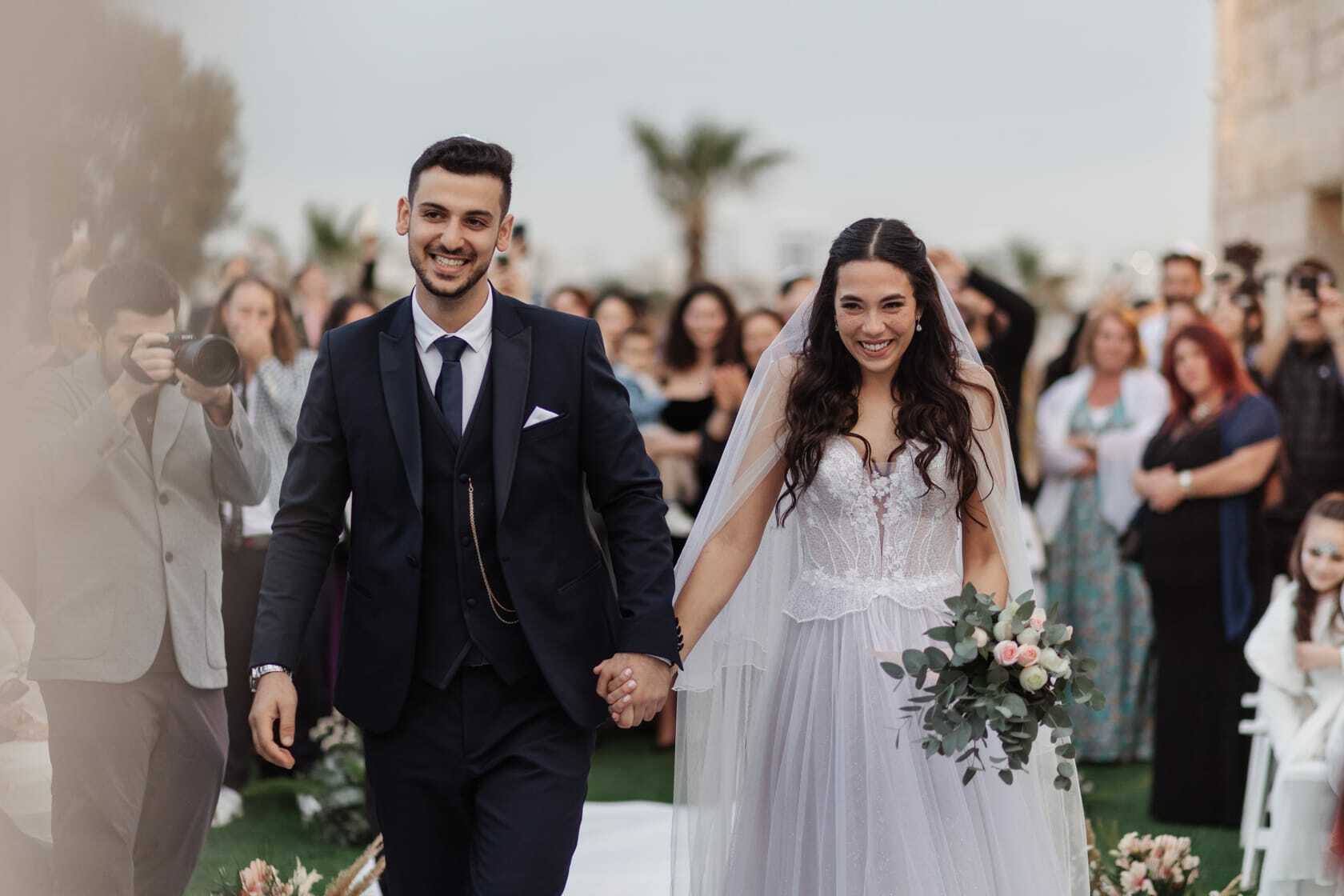
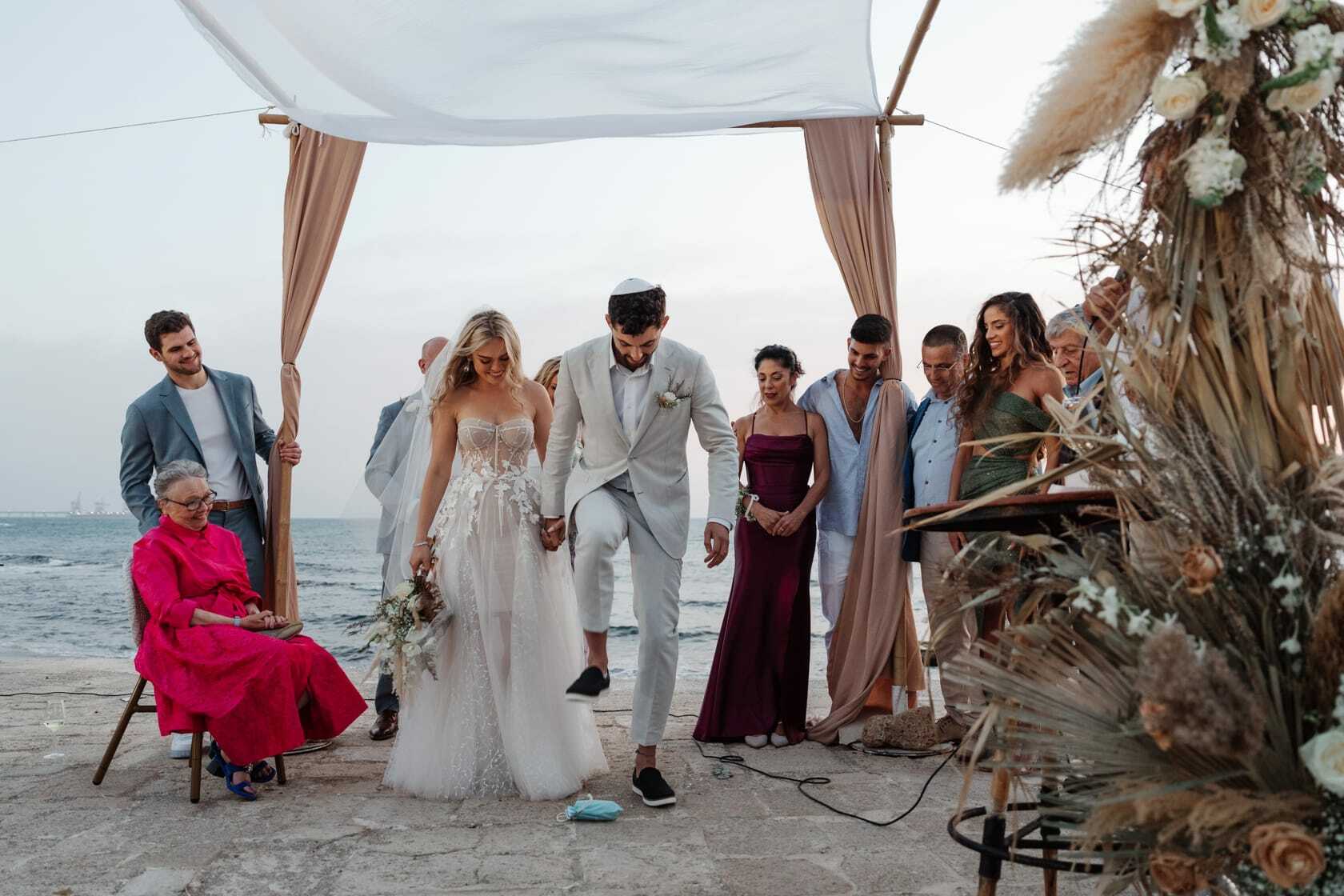
- Chuppah around sunset. Short — often 15–20 minutes. Usually no long processional; the couple walks in with their parents. It ends with breaking the glass and everyone rushing in to hug you.
- Dinner and dancing. Then the party — Israeli weddings dance a lot and late. A first dance and a cake are optional; many couples skip them.
A full wedding day usually runs 6–10 hours. On our side, a photographer (and Alice on video, if you want a wedding film) covers it from the portraits to the dance floor. Planning something shorter — a small ceremony, an elopement or just the chuppah? If your date is fixed, book early anyway: a short wedding still takes the whole date in our calendar.
5. Planning a destination wedding in Israel from abroad
Most of our couples meet us in person for the first time on the wedding day, and it works because the planning is simple and in English:
- Message us on WhatsApp with your date and venue (or the region you like). We'll check the date and send options for wedding photography and wedding video.
- A video call over Zoom, Google Meet or WhatsApp to get to know each other and talk through the day.
- Booking. We sign the contract remotely and you reserve your date with a retainer fee — no need to be in Israel for any of it.
- The wedding brief. A month or two before, you fill in our wedding brief: timeline, family members, must-have shots. Venues outside Tel Aviv and Jerusalem are no problem — see travel around Israel.
- A second shoot day, if you like. Many couples fly in a few days early. A pre-wedding or day-after session in Jerusalem's Old City, Jaffa or the desert gives you relaxed photos without guests — like Rachel & Aryeh did.
- Your photos, delivered online. You get an online gallery to download and share with family abroad — how it works. Printed albums are available too.